
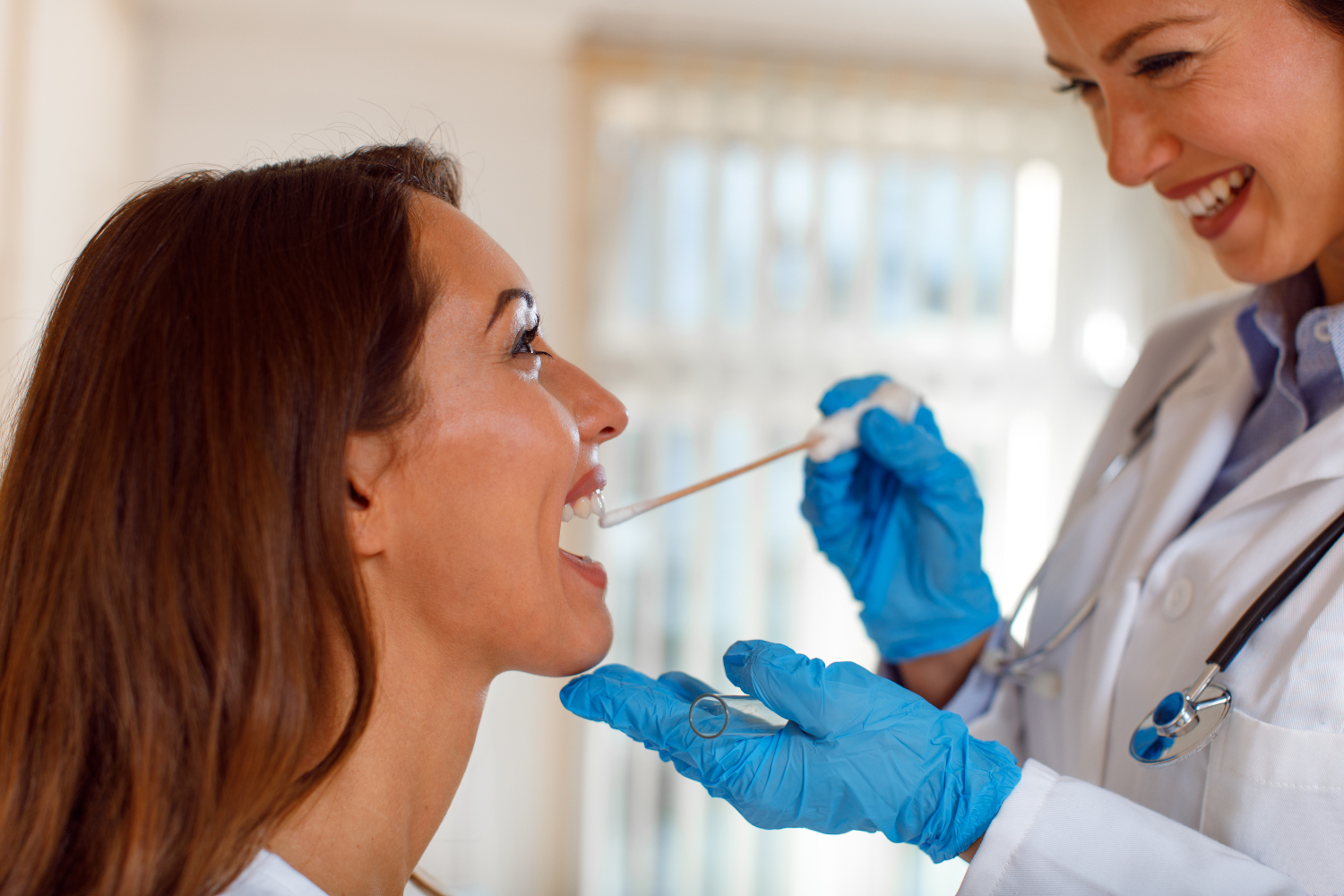
At Dentistry 411, we keep tabs on the emerging tech shaping chairside care, and salivary diagnostics is one of the quietest but most disruptive forces we see gaining traction right now. SimplyTest, a company leading in this space, has just inked a deal with Smile Source to integrate its tests into more than 800 of the network’s independent dental practices across the country. Combined with the recent launch of a molecular test targeting peri-implant disease, SimplyTest is positioning saliva as a front-line diagnostic tool and routine part of evidence-based care. The implications for clinical workflows and patient communication are worth a closer look.
Not Just a Spit Test
The SimplyTest Oral Health–Perio panel screens for key bacterial pathogens linked to periodontal disease, caries-associated bacteria, Candida albicans, and oral viruses. The test comes with a stabilizing buffer that allows samples to remain viable at room temperature, eliminating cold chain logistics and making it easy to implement chairside or even at home.
For dentists, this innovation simplifies routine diagnostic capabilities. We can now catch early microbial changes before symptoms even appear. But more importantly, it supports preventive intervention and opens the door to personalized risk assessment in a way that feels accessible to patients. It’s not a stretch to imagine salivary diagnostics becoming as common as blood pressure checks in medical practice as they are quick, noninvasive, and loaded with clinical insight.
While molecular salivary testing isn’t new, what’s changing is its scalability and ease of implementation. Simplified sample handling, faster turnaround, and expanded pathogen panels are moving these tools from university settings to general practices. Companies like OralDNA and Dentulu have also entered the space, indicating broader interest and competition in the market.
A New Tool for Implant Failures
Peri-implant disease has been a long-standing diagnostic frustration, but traditional probing and radiographs offer delayed insight. SimplyTest’s new IMPLANT test is among the first commercial offerings to target peri-implant pathogens chairside or remotely, though other researchers and startups are exploring similar molecular approaches. As these tests evolve, clinicians will need to weigh the added data against cost, insurance coverage, and real-world clinical outcomes.
For patients with implants, or those being treatment planned for one, this kind of early microbial surveillance could significantly reduce the risk of failure. It also arms clinicians with a new layer of clinical justification for treatment decisions, particularly when managing borderline cases or patients with complex medical histories.
Diagnostics That Speak to Systemic Health
Salivary diagnostics extend far beyond the oral cavity. Periodontal pathogens have documented associations with Alzheimer’s disease, diabetes, cardiovascular events, and certain cancers. The ability to screen for these pathogens at scale offers another point of systemic disease interception and an opportunity for dental practices to be at the frontline of medical-dental integration. This kind of testing ties oral findings to broader health outcomes in a way patients and referral networks alike can understand. And when you’re competing for relevance in an era of wearable health tech and remote care, that matters.
What the Science Says
Researchers at institutions like the Forsyth Institute and UCLA have been exploring the diagnostic power of saliva for years, with peer-reviewed studies confirming its potential in detecting not just periodontal disease but even biomarkers for cancers and autoimmune disorders. The science is growing, but so is the skepticism. Most studies are small, protocols vary, and reimbursement remains inconsistent. Until larger trials can validate long-term outcomes, salivary diagnostics should be seen as promising adjunctive tools, not clinical must-haves (at least, right now). The data is compelling, but real-world integration at scale will require a balance of optimism and critical evaluation. Dentistry 411 will continue tracking how this technology — and the Smile Source rollout — shapes clinical practice in the months ahead.
Why This Matters for Your Practice
Salivary testing is clinical, fast, reimbursable in some cases, and increasingly expected by patients who already use DNA kits to check their ancestry and gut microbiome at home. The fact that SimplyTest has scaled into hundreds of practices under Smile Source shows this is a quiet trend that could soon become the norm.
Whether you’re running a solo practice or managing multiple locations, salivary diagnostics is a low-barrier upgrade that can deliver high-yield insight. If you’re laser-focused on staying ahead of risk, optimizing implant outcomes, or building a more integrated care model, this tool might be one worth adopting sooner rather than later. Otherwise, wait and see. We certainly will.
Dentistry 411 will continue to track the science, the products, and the legal landscape so you don’t have to. Subscribe to stay ahead of the curve, cut through the marketing, and make smarter decisions in your dental practice.
SOURCES: Becker’s, Business Wire, Clinical Cancer Research, Oral-Based Diagnostics, ADA, PeerJ
This content is intended for educational purposes only and does not substitute for clinical judgment. Treatment decisions should be based on individual patient needs, professional guidelines, and a comprehensive clinical evaluation.